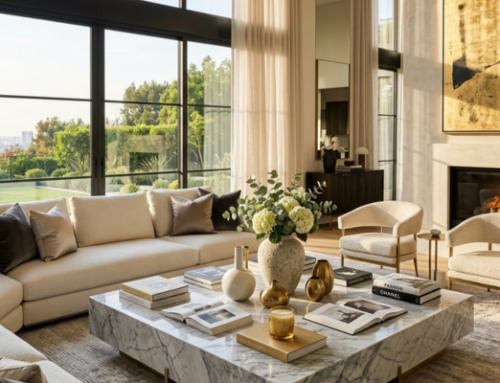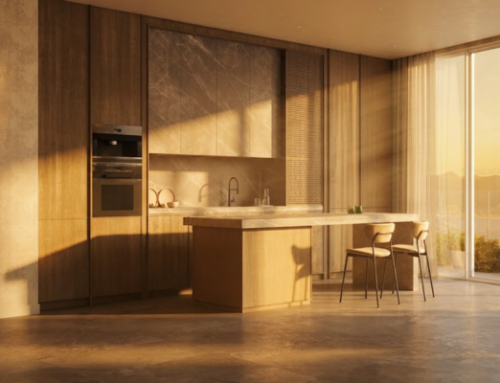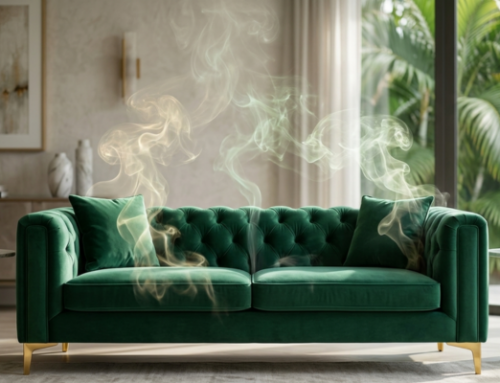

Here’s the truth most designers won’t say out loud: your home probably doesn’t look the way you want it to because of what you’ve added, not what you’re missing. A home looks more expensive not by what you buy — but by what you remove.
After decades working as a luxury non-toxic interior designer, I’ve seen the same mistakes repeated across beautiful homes at every price point. The problems aren’t about budget. They’re about intention. So before you buy another throw pillow or repaint another wall, read this first.
#16 — Matchy-Matchy Furniture
When everything in a room matches perfectly, your home starts to feel like a furniture showroom, not a reflection of you. Matching sets flatten the energy in a space. They tell the eye exactly where to go — and then there’s nowhere interesting to land.
Think about your favorite outfit. You wouldn’t wear the same fabric head-to-toe. Design is no different.
The fix: Mix textures, tones, and finishes within the same palette. Pair a linen sofa with a velvet chair. Balance a sleek table with something natural and earthy. When you shop, stop buying entire sets. Buy pieces you love individually and let them talk to each other. That’s what creates design harmony — not matching it into submission.
#15 — Too Many Throw Pillows and Blankets
Pillows and blankets are beautiful in the right quantity. Too many and your furniture feels cluttered instead of cozy. You lose the very sense of comfort that layering is supposed to bring.
The fix: Two or three pillows on a sofa is plenty. One for a chair. Go for contrast and texture — boucle, linen, organic cotton. Swap them seasonally to keep the energy fresh: light linens in summer, cozy textures in winter. And please — use down-alternative inserts. Soft, ethical, and long-lasting. Keep what feels alive and donate what doesn’t.
#14 — Exposed Wires and Cables
Tangled cords are visual noise. They interrupt flow and — this is not a small thing — they clutter your mind. Our eyes are constantly scanning. When they register chaos, they send that message to the brain. You feel it before you can name it.
The fix: Hide them. Tape them down. Use cord covers. Go wireless whenever possible. And when new electronics come in, manage the wires immediately — not “later.” It’s one of those small habits that completely transforms a room’s energy at zero cost.
#13 — Rugs That Are Too Small
This is one of the most common mistakes I see in otherwise well-designed rooms. A rug that’s too small makes your furniture look like it’s floating in space. Rugs ground a room — they’re like the roots of a tree. Without proper scale, everything feels off-balance.
The fix: Choose a rug that connects your furniture pieces visually. If your sofa and chairs feel disconnected, the rug is too small. Larger rugs made from jute, organic cotton, or recycled materials are beautiful, healthier, and significantly more impactful than the correctly-sized synthetic version. If your floors need help in certain areas, layer smaller rugs for an organic, cohesive feel.
#12 — Fake Plants
Skip the plastic greenery. Fake plants don’t bring energy or movement — they’re static. Real nature emits something that no synthetic object replicates. It calms, it grounds, and it restores.
The fix: Bring in living plants, even if it’s just a single branch or leaves in a vase. That’s biophilic design — connecting indoors with nature — and it changes the feel of a space in ways that are genuinely hard to explain until you’ve experienced it. If you’re not great with plants, start small. Succulents, snake plants, and trailing vines are low maintenance and high impact. Keep it real. You’ll feel the difference.
#11 — A Neglected Entryway
Your entryway is your home’s first impression — it’s that first reveal that says everything about what’s coming inside. A cluttered entry blocks flow. You feel it even before you step through the door.
The fix: Limit the entryway to five elements maximum: a console, a chair, a pretty bowl for keys, one statement art piece, and one personal touch — maybe a sculpture or a vase with fresh flowers. Don’t let it become a dumping zone. Everything in this space should say welcome, not chaos. Let it whisper peace the second you walk through the door.
#10 — Random or Overcrowded Wall Art
Art isn’t about filling walls — it’s about emotion. Randomly hung or overcrowded walls look chaotic and instantly cheapen a space, regardless of what the art itself costs.
The fix: Curate intentionally. A symmetrical grid or one oversized piece reads as sophisticated. Invest in authentic frames — wood, metal, or bamboo. Never plastic. And leave white space. Negative space is powerful. It lets your art — and your mind — breathe. Less is not a compromise here. Less is the point.
#9 — Outdated Bedroom Bedding
Heavy patterned comforters and matching pillow sets had their moment. That moment is over. These choices drain energy from a room and make your bedroom feel stuck — which is the last thing you want in the space where you spend a third of your life resting and healing.
The fix: Stick with soft neutrals — creamy whites, earth tones, and organic fabrics. Layer with texture rather than clutter. Add interest with a throw or one pillow in a subtle pattern. Resist the quick fix of a “bed in a bag.” Build your bedding with intention, one layer at a time. And always choose non-toxic, cruelty-free materials. Your sleep quality and your health will reflect the difference.
#8 — Mixing Metals Without Intention
Mixing metals is gorgeous — when it’s done thoughtfully. Without intention, it looks haphazard. Each metal carries its own mood: gold is warm, chrome is sleek. When they compete without a hierarchy, neither wins.
The fix: Choose one dominant metal and one accent. Let them complement each other rather than compete. And resist following trends blindly. Black hardware, for example, is fading quickly — if you install it now to be on trend, you’ll be replacing it in two years. Pick metals that reflect your personality and flow naturally with your other materials. Design for longevity, not for the moment.
#7 — Dated or Cheap Door Hardware
Hardware is like jewelry for your home. Dated or worn handles bring the entire space down — and unlike art or furniture, you interact with hardware constantly. You touch it every day. It’s sensory and it matters more than people realize.
The fix: Change your knobs, pulls, and hinges for updated ones that feel good in your hand. Don’t buy cheap bulk packages — they look exactly as cheap as they are. Invest in quality, even if you do it one room at a time. These are the little details that whisper luxury to anyone who knows what they’re looking at.
#6 — The Wrong Scent
Smell is the first design element people register — even before visuals. It’s our strongest sense and it connects us emotionally to a space. The wrong scent can make a beautiful room feel heavy, synthetic, or off.
The fix: Choose one consistent, natural fragrance for your home. Think eucalyptus, citrus, or sandalwood. Use vegan, non-toxic diffusers or candles — conventional scented candles frequently contain synthetic fragrance compounds and paraffin wax that off-gas when burned. Skip aggressive chemical mixes entirely. Your scent should feel like a gentle welcome, not an overpowering perfume counter.
#5 — Tiny Trinkets Everywhere
Visual clutter doesn’t accumulate all at once — it happens one small impulse purchase at a time. Tiny trinkets everywhere don’t add character. They create visual confusion, and our brains crave simplicity. Too many small things make it hard to focus or relax in a space.
The fix: Group decorative accessories in threes. A candle, a small sculpture, and a beautiful book. That’s enough. Give everything space to breathe. Stop buying unplanned décor on impulse. Tell a story with the objects you choose — and choose them because they mean something, not because you needed to fill a shelf.
#4 — Over-Styled Shelving
Please don’t make your shelves look like a store display. Over-styled shelving feels cold and staged. It should reflect your life — personal, imperfect, and evolving.
The fix: Mix heights and materials — wood, glass, pottery, plants, and books. At our Greene Hill property, it took days to find the right balance on the library shelving. That patience pays off in ways that no amount of rushed styling can replicate. Don’t rush to fill every shelf. Let it evolve with time, memories, and meaning.
#3 — The Wrong Wall Color
Color is energy. It influences how you feel in a space in ways that are documented and real, not just aesthetic preference. Gray walls, which felt safe and were everywhere for a decade, are fading — and for good reason. They drain emotion from a room rather than supporting it.
The fix: Test paint colors by placing large samples on your walls — at least two feet by two feet — and observe how they change in morning and evening light. They will look different, and that difference matters. Choose soft whites, warm taupes, or earthy greens for balance and calm. And always, always use zero or low-VOC, non-toxic paints. Your body responds to what your walls hold, whether you’re aware of it or not.
#2 — Neglected Ceilings
The forgotten fifth wall. Popcorn ceilings and neglected surfaces instantly date a home — and ceiling design is where so much inexpensive drama is available if you’re willing to look up.
The fix: Smooth out textured ceilings or paint them slightly darker or lighter than your walls. This technique — called color drenching — creates a feeling of quiet luxury that you’ll be seeing everywhere in the coming year. If your architecture allows it, add beams, texture, or panels. Your ceiling frames your entire experience of a room. It deserves to be part of the design.
#1 — Holding On to Things That No Longer Serve You
This one goes deeper than design.
We all hold on to things that have outlived their purpose — the oversized coffee table that never quite worked, the chair you’ve been meaning to reupholster for three years, the artwork that was someone else’s taste. These pieces carry emotional weight. And that weight is real in a space.
The fix: Let them go. Donate them. Sell them. Free the physical and emotional space they occupy. Don’t design from guilt or “what if.” Design for who you are today.
Your home should evolve with you — not hold you in old energy.
The Principle Behind All 16
The key to a home that looks elegant and feels right is to decorate with intention, not impulse. Take your time. Do one room at a time — one layer at a time. Design is about harmony between who you are and how you live.
And always choose mindfully: materials, colors, and furnishings that honor your health, your values, and the wellbeing of all living beings — human and non.
What’s the first thing you’re going to remove? Leave it in the comments. And if you want to see the non-toxic, cruelty-free sources behind everything we use at Design Detox, visit my Amazon storefront — linked below.
Deborah DiMare is a luxury non-toxic, ethical (vegan) interior designer based in Miami and Hudson Valley, NY. Design Detox is a YouTube channel dedicated to beautiful, healthy, and ethically sourced interiors.


Join our Facebook Community Design for a Non Toxic & Cruelty Free Home.
Check out our non-toxic and cruelty-free Amazon shop.
In case you missed it 🌸
Need help creating a safe & healthy home for you & your family?
BOOK US for a 20-minute call!
Need even more family-friendly home design tips?
Meghan Markle and her choice of nursery paint.
Read more about pesticide-free Gardening Know How
How a good desk chair will improve back pain.
How to protect our marine life ocean plastic.
Best Materials for a Kitchen Backsplash Remodel.
What are volatile organic compounds (VOCs)?
How time in nature can improve our mental health and sharpen our cognition?
Why should I be concerned about lead poisoning?
31 Kitchen Color Ideas to Elevate Your Cabinetry Without a Full Remodel.
Just a heads up, this article may contain links to affiliate sites, products or services. If you purchase something through one of those links, you won’t pay a penny more! The affiliate simply provides us with a small commission which helps us fund our operations, promoting healthy & compassionate interior decorating.

Share this with friends!
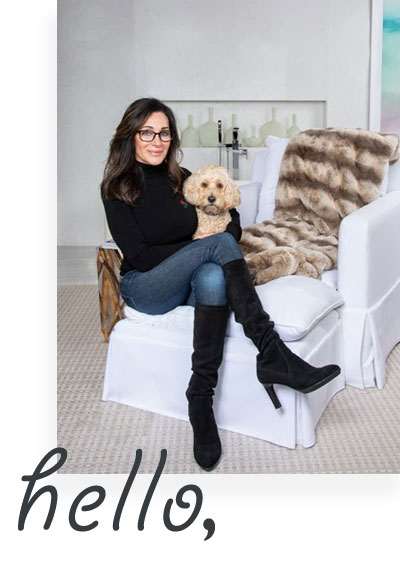
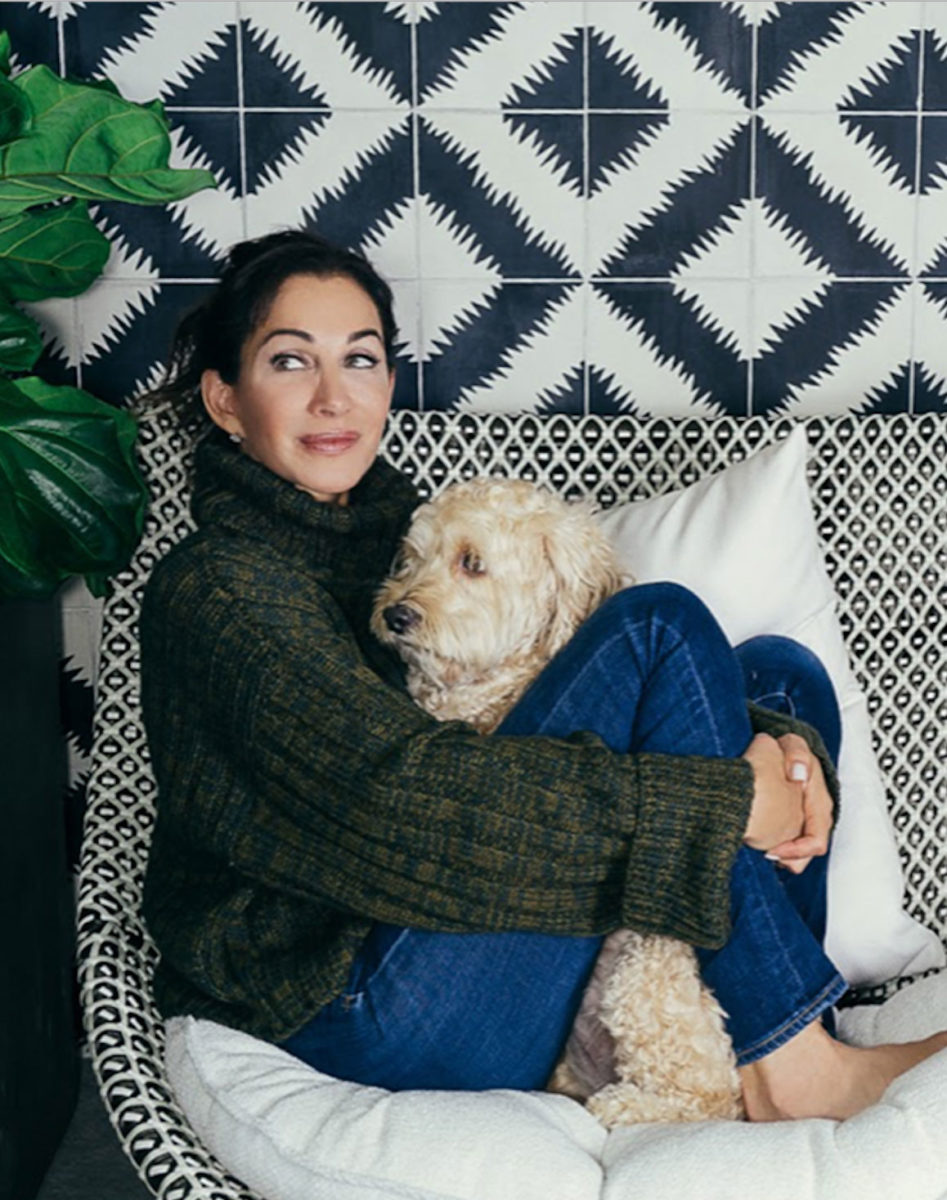
I’m Deborah! My mission is to show others by demonstration, that no living being, human & non, be sacrificed for beautiful, non toxic, healthy & durable furniture & decor. More about me.