
I walked into a client’s home last year. Beautiful sofa. Luxury fabric. And I had to tell her — this is one of the most chemically loaded pieces of furniture in your entire house.
She was shocked. Most people are.
When we think about toxins in the home, we think about paint fumes or cleaning products. Almost nobody thinks about the sofa. But here is the truth: you spend more time in physical contact with your upholstery than almost any other surface in your home. You sit on it for hours every day. Your children are on it. Your pets are on it. And in many cases, the fabric you are touching is a petroleum-derived synthetic treated with flame retardants, stain repellents, and antimicrobial coatings — all of which off-gas into the air you breathe in your own living room.
The research on this is not fringe science. The EPA has identified dozens of volatile organic compounds off-gassing from synthetic textiles, and studies have found measurable flame retardant levels in house dust from homes with conventional upholstered furniture. This is chemistry — not scare tactics.
As a luxury non-toxic interior designer with over two decades of experience specifying cruelty-free, toxin-free materials, here is exactly what I look for — and what I avoid — in every single project.
The Problem with Synthetic Fabrics
Polyester, nylon, acrylic, and microfiber are petroleum derivatives. They are made from plastic. And while they can feel soft and look luxurious, they carry a chemical load that plant-based fibers simply do not.
Here is what synthetics are typically treated with:
PFAS — per and polyfluoroalkyl substances — are used for stain and water resistance. Scientists call these forever chemicals because they do not break down in your body or in the environment. They have been linked to thyroid disruption, immune system effects, and hormonal interference.
Brominated or chlorinated flame retardants have been added to furniture fabrics for decades. Some have been restricted, but replacement chemicals have been introduced with similar toxicity profiles. The names change. The harm profile often does not.
Antimicrobial treatments — often triclosan-based — are added to fabrics marketed as hygienic or easy to clean. The marketing sounds reassuring. The chemistry is not.
And microfiber specifically sheds microplastic particles every time you sit on it. You are breathing these in. Every day.
The Fabric Nobody Warns You About
The fabric I see most in high-end interior design projects — the one in the most beautiful Instagram interiors and the most expensive showrooms — is one of the worst offenders.
It is polyester velvet.
Real velvet with a genuine, safe fiber base is rare and expensive. What fills most showrooms and furniture catalogs is polyester velvet — a petroleum-based fabric, typically with a stain-resistant treatment applied, sitting in your living room on a piece of furniture that cost anywhere from three thousand to twenty thousand dollars. It looks luxurious. It photographs beautifully. And it is one of the highest synthetic fabric exposures you can bring into your home.
What I specify instead — and what is becoming increasingly available at the luxury level — is Tencel velvet or hemp-blend velvet from mills that hold OEKO-TEX Standard 100 certification. The look is genuinely beautiful. The chemical load is dramatically lower.
Plant-Based Doesn’t Automatically Mean Safe
This is the nuance that most non-toxic content glosses over, and I want to be honest with you about it.
Cotton is one of the most pesticide-intensive crops in the world. Conventional cotton carries pesticide residue and is frequently treated with formaldehyde-based wrinkle and shrink resistance finishes. When something is labeled cotton, that tells you almost nothing without knowing how it was grown and processed.
Linen, made from flax, is one of the cleaner plant-based options. Flax requires very little pesticide to grow, particularly in European cultivation. Linen is durable, naturally temperature-regulating, and genuinely beautiful. It is one of my most-specified fabrics.
Hemp grows without pesticides, requires minimal water, and produces an extraordinarily strong, durable fiber. Hemp upholstery has come a long way in design quality and texture. It is genuinely luxurious at the high end and one of the most sustainable fibers available.
Organic cotton, when certified, is a completely different product from conventional cotton. Grown without synthetic pesticides and processed without toxic finishing chemicals — but only trustworthy when certified. The label alone is not enough.
Tencel and Lyocell are semi-synthetic fibers derived from wood pulp, typically eucalyptus or beech trees. The production process is closed-loop — solvents are recycled rather than discharged into waterways. OEKO-TEX certified Tencel is one of the safest, most elegant options available for upholstery.
The Three Certifications That Actually Matter
Everything else is marketing. These three are the ones I use to approve or reject any fabric before it ever goes into a client’s home.
1. GOTS — Global Organic Textile Standard
This is the gold standard for organic natural fibers. GOTS certification means the fiber was grown organically, processed without toxic chemicals, and the entire supply chain was independently audited. If a fabric claims to be organic without GOTS, I do not trust it. The certification requires verification. The claim alone does not.
2. OEKO-TEX Standard 100
This certifies the finished fabric — not just the raw fiber — testing for over 100 harmful substances including dyes, finishes, and residual processing chemicals. A fabric can be made from organic cotton but still carry harmful dye chemicals. OEKO-TEX Standard 100 covers what actually ends up in your home. This is the certification I look for on every fabric regardless of fiber type.
3. GOLS — Global Organic Latex Standard
This applies specifically to natural latex used in cushioning and padding. If your sofa has foam cushioning — and almost all do — that foam is a significant off-gassing source inside your home. GOLS certified natural latex is the clean alternative to conventional polyurethane foam, which is one of the most chemically problematic materials in residential furniture.
What I Actually Specify in Client Projects
For upholstery face fabric: OEKO-TEX Standard 100 certified Tencel, linen, hemp, or organic cotton. There are European and domestic mills producing extraordinary textiles in these categories. The design quality is fully competitive with conventional luxury fabrics. I do not compromise on beauty to achieve non-toxic. That is the entire premise of my work.
For cushioning: GOLS certified natural latex wherever possible. If a client is starting fresh on a sofa, I specify natural latex cushioning as a non-negotiable. It is the single biggest off-gassing source in most upholstered furniture — and it is completely replaceable.
For performance situations — families with children, high-traffic areas — I look at OEKO-TEX Standard 100 certified fabrics specifically tested for low chemical emissions, and I avoid any fabric with a stain guard treatment that is not confirmed PFAS-free.
What I avoid entirely: anything described as antimicrobial without disclosing the treatment chemistry. Any microfiber in high-contact applications. Any stain treatment that cannot be verified as PFAS-free.
The Good News
The market for clean, cruelty-free luxury fabric has genuinely improved. The options available today are beautiful. You do not have to choose between a gorgeous home and a healthy, ethical home.
That is exactly what my work is about — and exactly what this channel is here to prove.
If you want to see the certified fabrics and non-toxic upholstery products I actually recommend, I have linked my Amazon storefront below. Everything I specify. Not sponsored. Just what I use.
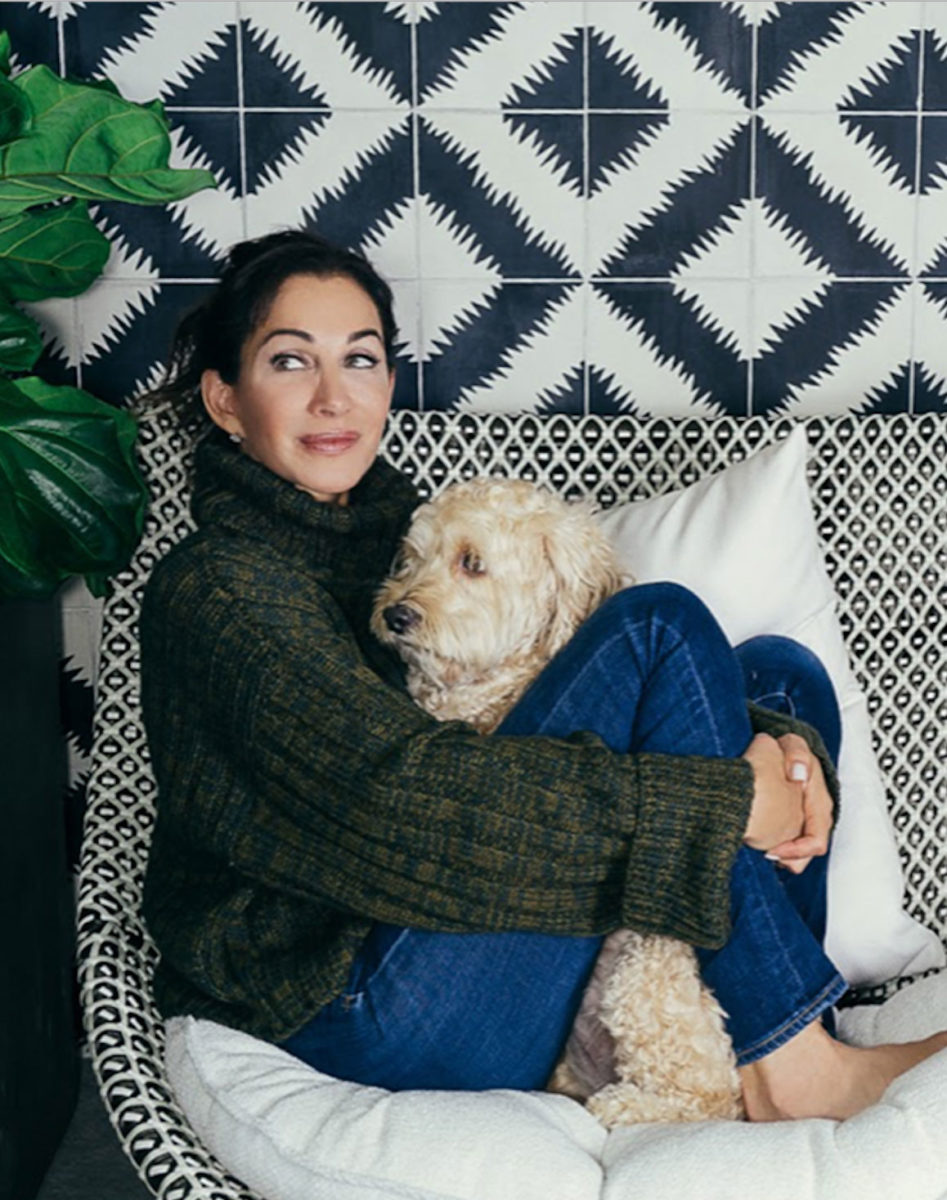
Deborah DiMare is a luxury non-toxic interior designer based in Miami. She has been designing with cruelty-free, toxin-free, ethically sourced materials for over twenty years. Follow her on YouTube at Design Detox.

Join our Facebook Community Design for a Non Toxic & Cruelty Free Home.
Check out our non-toxic and cruelty-free Amazon shop.
In case you missed it 🌸
Need help creating a safe & healthy home for you & your family?
BOOK US for a 20-minute call!
Need even more family-friendly home design tips?
Meghan Markle and her choice of nursery paint.
Read more about pesticide-free Gardening Know How
How a good desk chair will improve back pain.
How to protect our marine life ocean plastic.
Best Materials for a Kitchen Backsplash Remodel.
What are volatile organic compounds (VOCs)?
How time in nature can improve our mental health and sharpen our cognition?
Why should I be concerned about lead poisoning?
31 Kitchen Color Ideas to Elevate Your Cabinetry Without a Full Remodel.
Just a heads up, this article may contain links to affiliate sites, products or services. If you purchase something through one of those links, you won’t pay a penny more! The affiliate simply provides us with a small commission which helps us fund our operations, promoting healthy & compassionate interior decorating.

Share this with friends!

I’m Deborah! My mission is to show others by demonstration, that no living being, human & non, be sacrificed for beautiful, non toxic, healthy & durable furniture & decor. More about me.